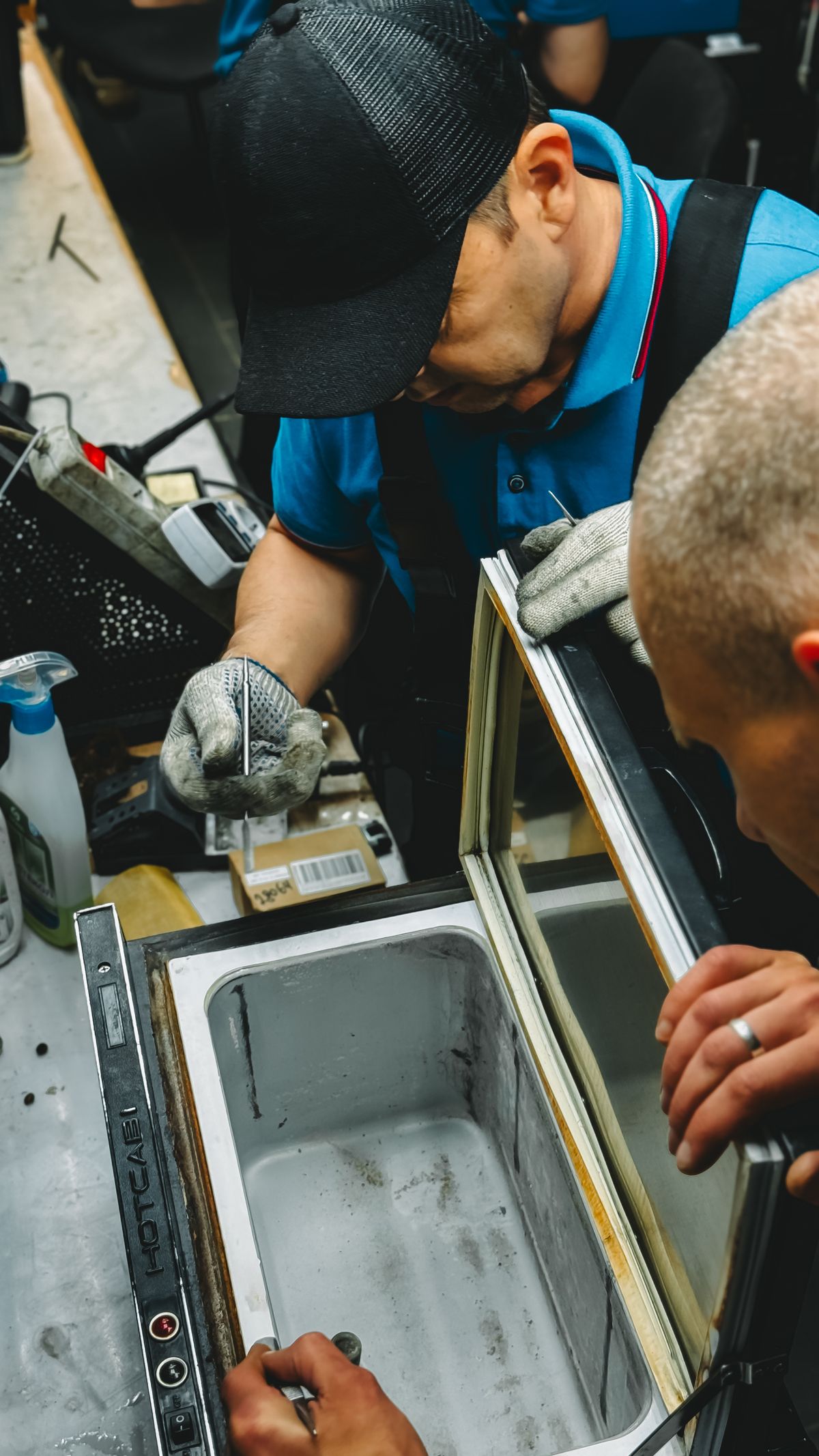
Every freezer has some frost — a thin layer on the walls or around the door is completely normal, especially right after loading in groceries on a humid day. What we get called about is different: a thick, spreading layer of ice that keeps coming back no matter how many times it's scraped off, sometimes packing in around food or blocking the door from closing fully.
Heavy, recurring frost almost always comes down to one of two causes: warm, humid air getting in through a compromised door seal, or a defrost system that's stopped clearing the coil the way it's supposed to.
Normal Frost Vs A Problem
A light, even frost that stays thin and doesn't noticeably grow week to week is just moisture in the air condensing — normal and not worth worrying about. What signals an actual problem is frost that's thick, uneven, concentrated around the door or vents, or that keeps returning heavily within days of being cleared. That pattern means moisture is getting in faster than the freezer's defrost system can handle, or the defrost system itself isn't running.
1. A Compromised Door Seal
This is the more common cause, and the easier one to fix. Every time the door doesn't seal completely, warm humid air from the kitchen gets pulled in and immediately freezes onto the coldest surfaces inside — which is exactly why frost tends to build up worst near the door on freezers with this issue.
- Run your fingers along the gasket for cracks, stiffness, or a section that's pulled away.
- Do the dollar-bill test: close the door on a bill so it's half in, then pull it out — it should resist, not slide free easily.
- Check that nothing inside is blocking the door from closing fully — a common and easily overlooked cause.
2. A Failed Defrost System
Modern frost-free freezers run periodic defrost cycles that melt any frost forming on the evaporator coil before it can build up. When part of that system fails — the defrost heater, timer, thermostat, or control board — frost accumulates unchecked on the coil itself, which can spread and eventually block airflow throughout the unit.
This type of frost buildup often shows up differently than a door-seal issue: it tends to be heaviest on the back wall or around the rear vents (where the coil sits) rather than concentrated near the door.
How The Defrost Cycle Is Supposed To Work
A clogged defrost drain can cause melted frost to pool and refreeze inside the freezer instead of draining away — sometimes mistaken for a defrost heater failure when it's actually a simpler blockage.
Quick Checks You Can Do
Before assuming a full defrost system repair is needed, a couple of things are worth trying first. Unplug the freezer for 24-48 hours to let all the built-up frost fully melt and drain (placing towels around the base to catch water), then plug it back in and monitor over the next week to see if and where frost returns. Where it comes back tells you a lot — near the door points to the seal, on the back wall or coil area points to the defrost system.
Related reading: check out our guides on refrigerator cooling issues and seasonal ice maker slowdowns.
Frequently Asked Questions
Yes — unplugging it for a day or two with the door open lets accumulated frost melt naturally. This is a useful diagnostic step, though it won't fix an underlying seal or defrost system failure on its own.
If these checks don't resolve it, our licensed freezer repair technicians in Frederick, MD can diagnose and fix the issue, often same-day.
Yes, meaningfully. Frost buildup on the coil or a poor door seal both force the compressor to run more often and longer to maintain temperature, which shows up as increased energy usage over time.
It varies by brand and model, but it's a common and generally affordable repair. Our technician will diagnose the exact cause during the visit and give you an upfront price before any work begins.
Yes, our vans are stocked with the most commonly needed parts for major brands, so most freezer repairs are completed in a single visit.